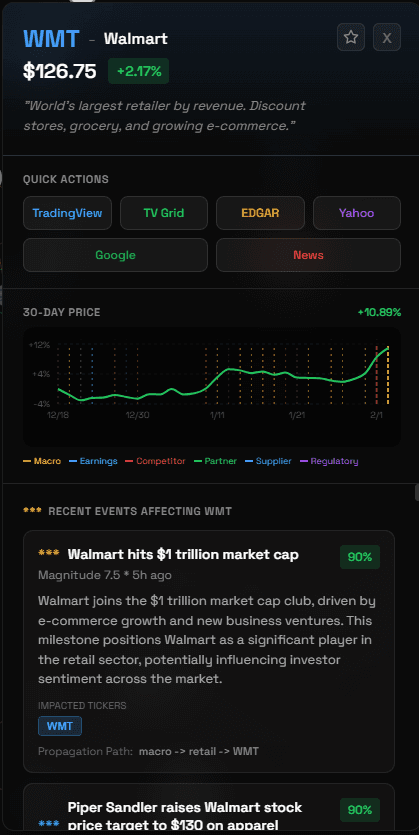
How Nodestock works
A deep dive into the graph architecture, sentiment engine, and event propagation system that powers Nodestock.
Nodes: The building blocks
Each entity in the market—from S&P 500 companies to commodities to regulators—is a node. Nodes carry real-time sentiment, market data, and connections to other entities.
- ✓Companies: AAPL, MSFT, NVDA, JPM, XOM, and 500+ more
- ✓Commodities: Oil, gold, natural gas, FX pairs
- ✓Regulators: Federal Reserve, SEC, FDA, FCC
- ✓Indexes: S&P 500, Russell 2000, Nasdaq 100
- ✓Private & Modeled: Pre-IPO companies, comparable peers
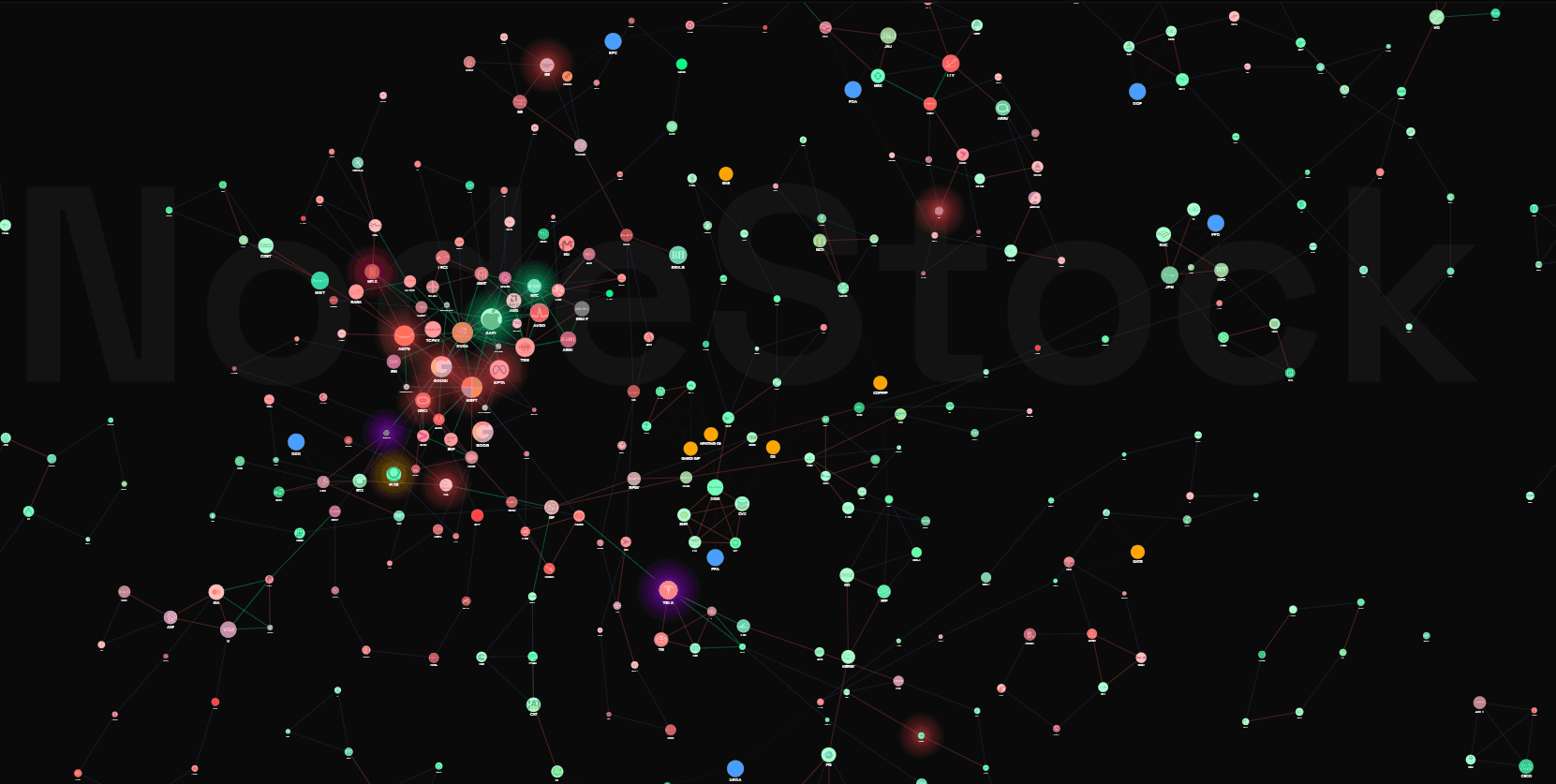
Edges: The relationships
Edges connect nodes and encode the nature of the relationship. Strength indicates intensity.
- ✓Supply Chain: Component dependencies
- ✓Competition: Direct market rivals
- ✓Regulation: Policy exposure and compliance
- ✓Macro Exposure: Broad economic factors
- ✓Correlation: Observed price movements
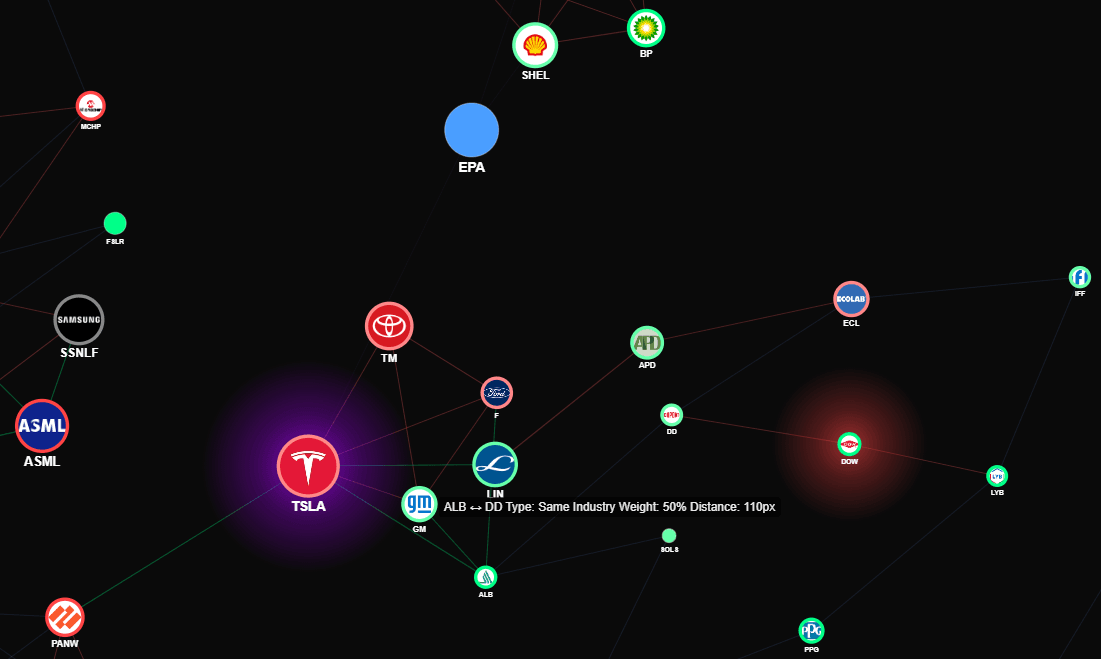
Sentiment: The signal
We compute sentiment continuously by analyzing trusted data sources. Each node has a real-time sentiment score: bullish, neutral, or bearish.
- ✓Sourced from: Earnings transcripts, news, SEC filings, market data
- ✓Updated: Every 15 minutes (Pro), or real-time (Team)
- ✓Confidence: Each score includes a confidence interval
- ✓Historical: Full sentiment history for backtesting
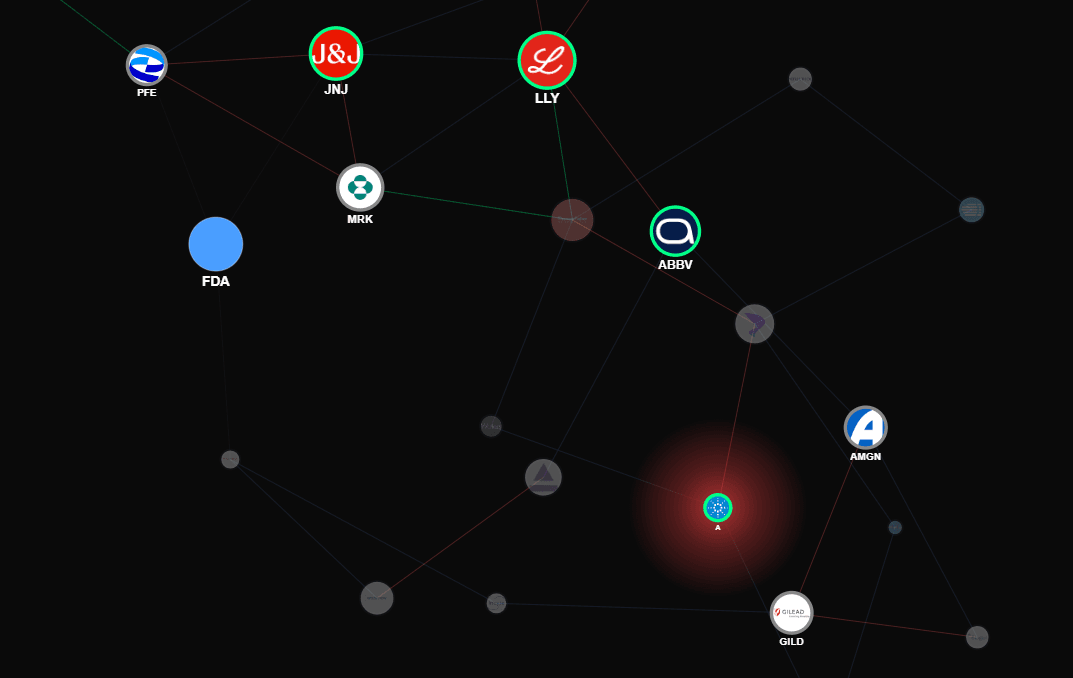
Earthquakes: The alerts
Major market events trigger "earthquake" detection. We compute which nodes are impacted and how the shock propagates through the network.
- ✓Event detection: Earnings surprises, regulatory decisions, market gaps
- ✓Propagation modeling: Simulation based on graph algorithms
- ✓Confidence scoring: Probabilistic impact estimates
- ✓Real-time alerting: SMS/email for Pro+ tiers